目录
这篇博客文章整理自 2026 年 10 月 30 日 MFCP 开源实践分享《Linux 开源贡献流程分享》。
我是陈磊(上游提交署名 Chen Miao / ChenMiaoi),目前在香港理工大学担任 Research Assistant,平时活跃在 Linux、QEMU 和 LLVM 等上游开源社区。我其实大二才开始接触编程,大三才真正动手参与上游贡献。这次分享主要从一个曾经的“开源新手”视角出发,聊聊我怎么从 GSoC 敲开 Linux 内核大门、怎么在邮件列表里和上游维护者打交道、Agent 时代几个顶级社区对 AI 的真实态度,以及我自己在实战中踩过的坑和顺手写的两个小工具。
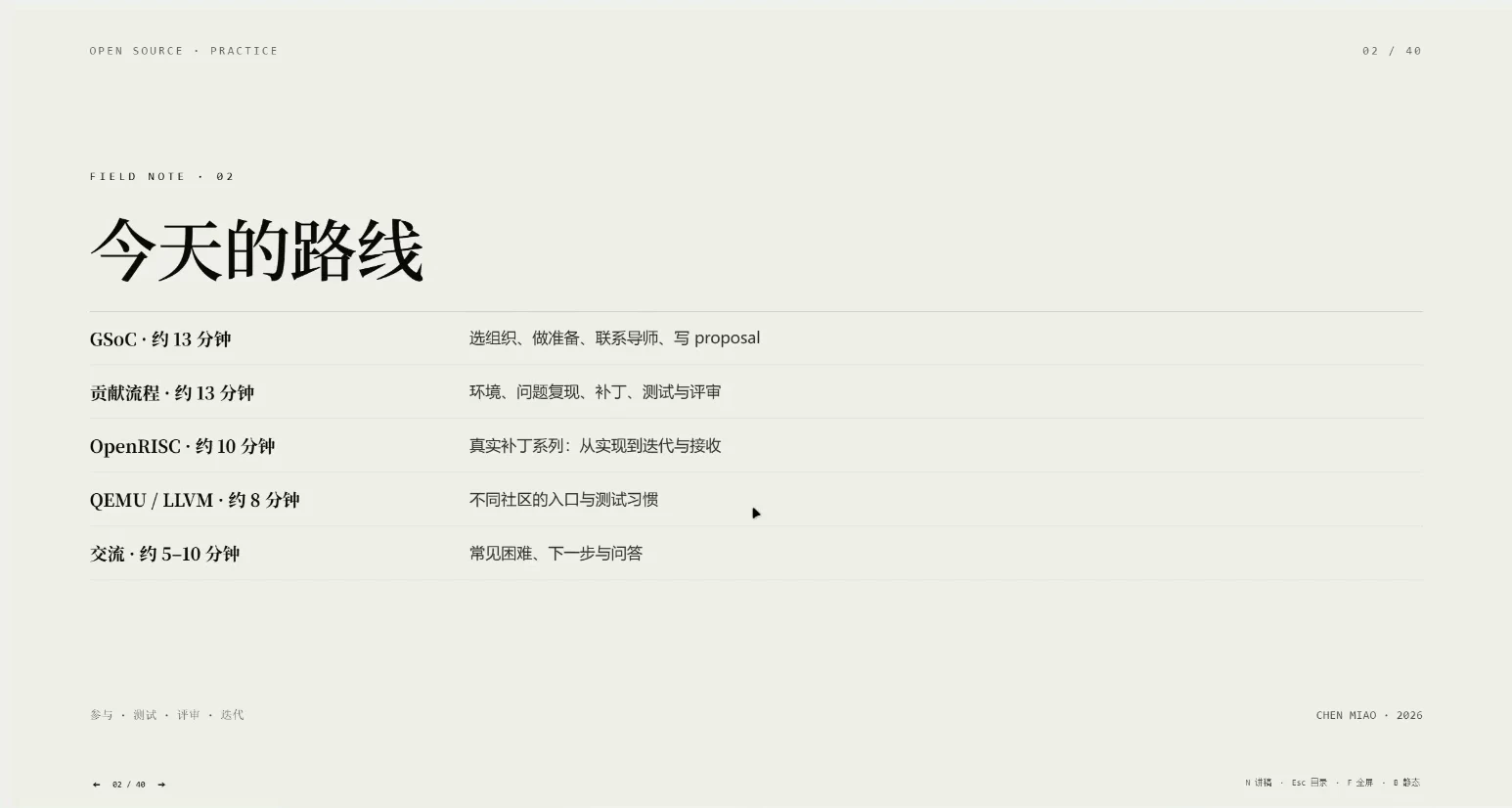
整个分享按四块展开:先聊 GSoC 的申请路径与避坑经验,再看 Linux 邮件列表 的补丁流转与我自己在 OpenRISC 上合入内核的真实补丁系列,接着对比 Linux、QEMU 与 LLVM 几个社区在 AI 时代的贡献边界,最后顺带展示两个我自己写着顺手的小工具。
别先问自己“够不够格”
我是在 2025 年才第一次申请 GSoC(Google Summer of Code) 的,其实我早就知道这个活动,但前面白白浪费了不少时间。2025 年之前大模型和 Agent 还没像现在这样火起来,身边总有人说:“GSoC 是全世界开发者一起抢的,你一个新人去申请肯定会被拒。”
那段时间我反复在心里打转三个问题:我真的够资格参加吗?我真的有能力做吗?就算申请上了,我真的能顺利做完结项吗? 我相信很多学了一两年代码、但还没真正提过上游补丁的同学,现在也还在纠结这三件事。
真走下来之后,我的答案特别简单:Just do it,直接去做就行了。
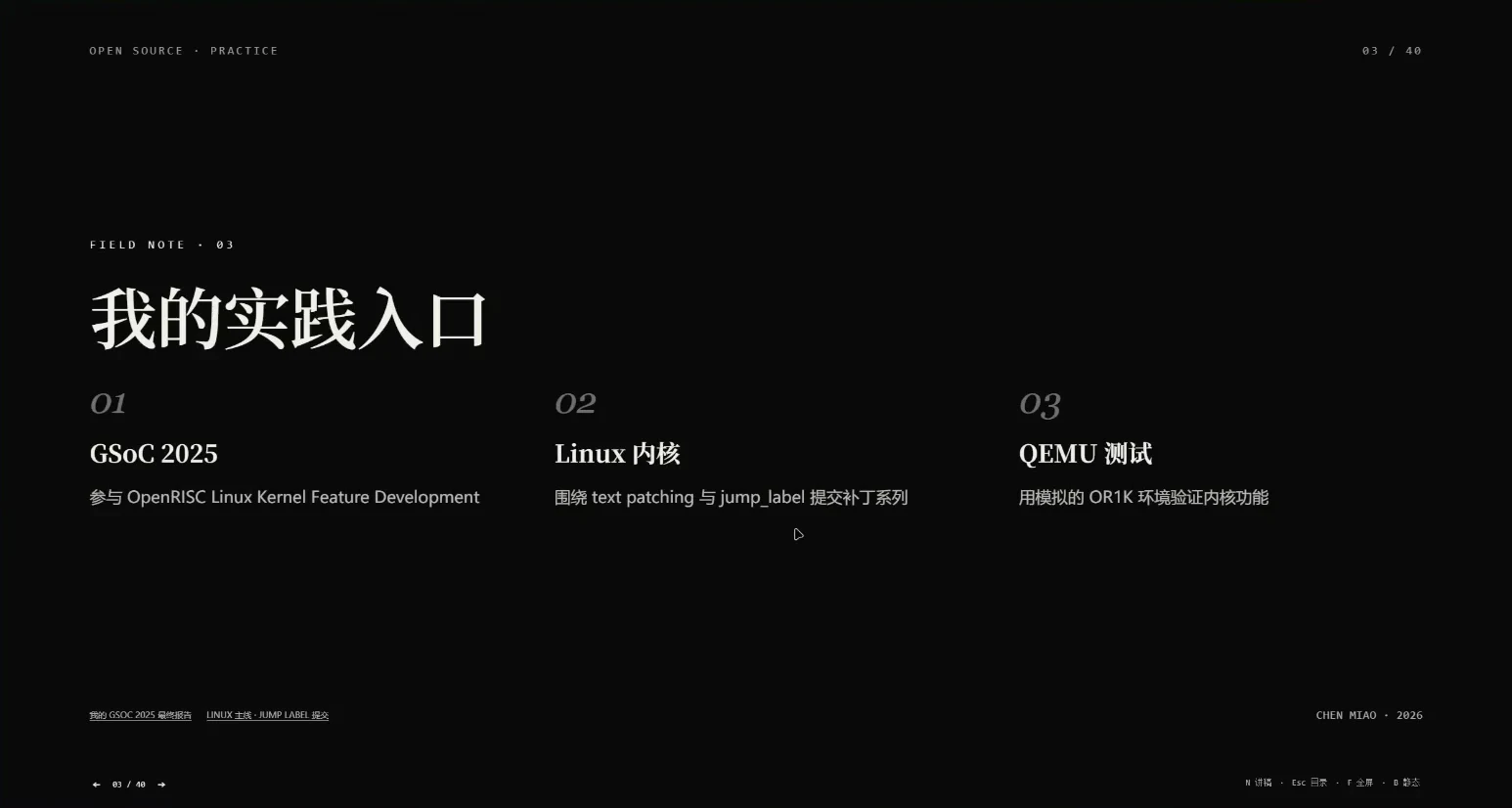
2025 年第一次申请时,我压根从来没有在 Linux 内核上开发过,跟那些早有内核经验的竞争者相比起点确实靠后。当时我硬着头皮直接给 Maintainer 发了封邮件去问,结果对方告诉我:GSoC 发布的任务本来就是面向新手设计的,在 Maintainer 和 Mentor 眼里,这些任务就该由新人来做。所以“够不够格”这件事,从来只需要你主动去问、主动去试。
GSoC 申请时间线与 Proposal
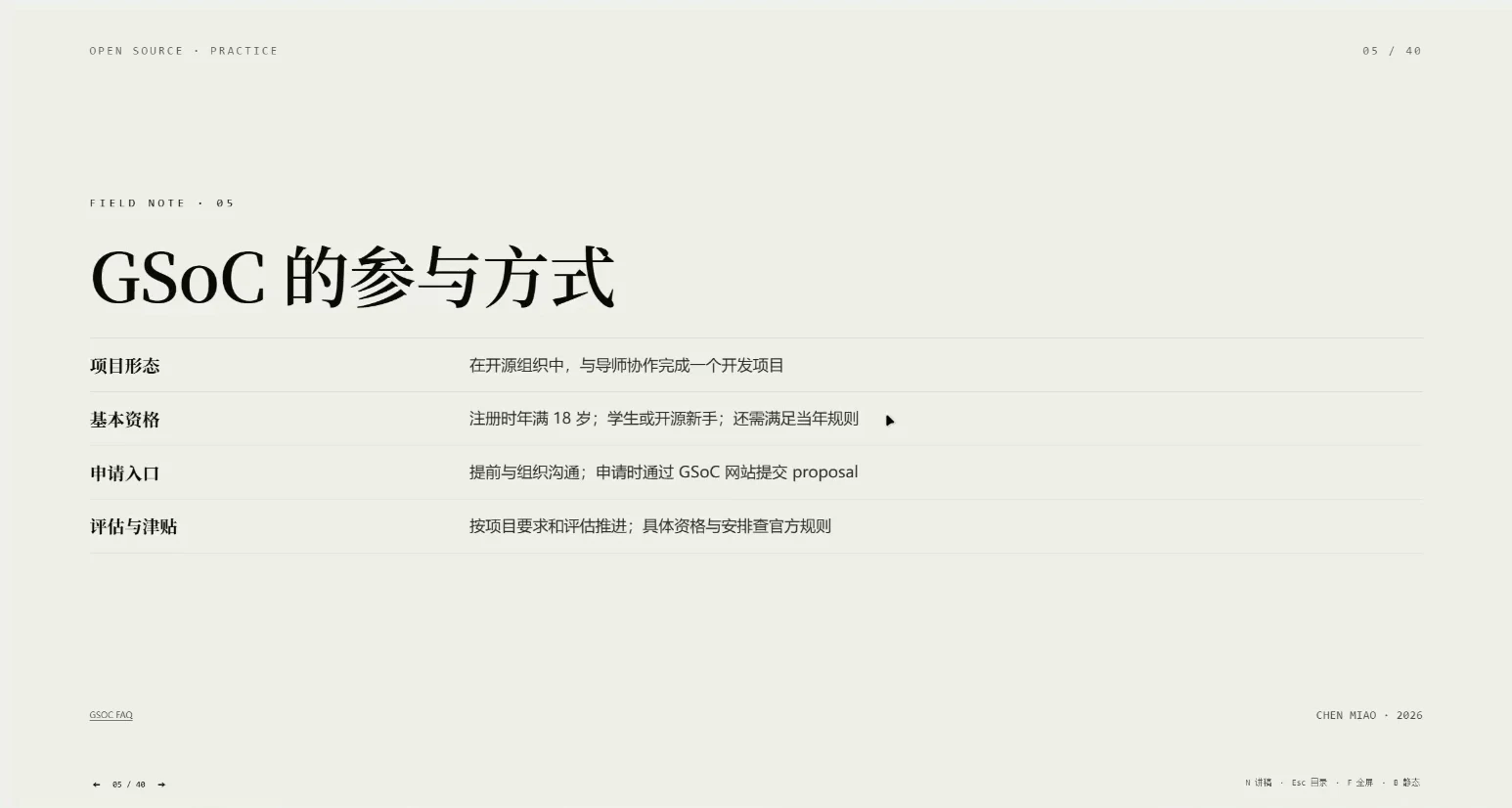
GSoC 的运作方式和 MFCP 有点像:Google 邀请各大开源组织申报任务并提供导师,由导师决定人选,只不过 GSoC 走的是竞争申请制,而 MFCP 更偏向自愿认领。
吃透时间线与名额机制
按照官方节奏,每年 1 月到 2 月是各个开源组织向 Google 申报并审核任务的窗口期,2 月下旬公布入选组织列表;3 月中旬到 3 月底是贡献者提交申请的阶段,等到 5、6 月份公布最终录取结果。
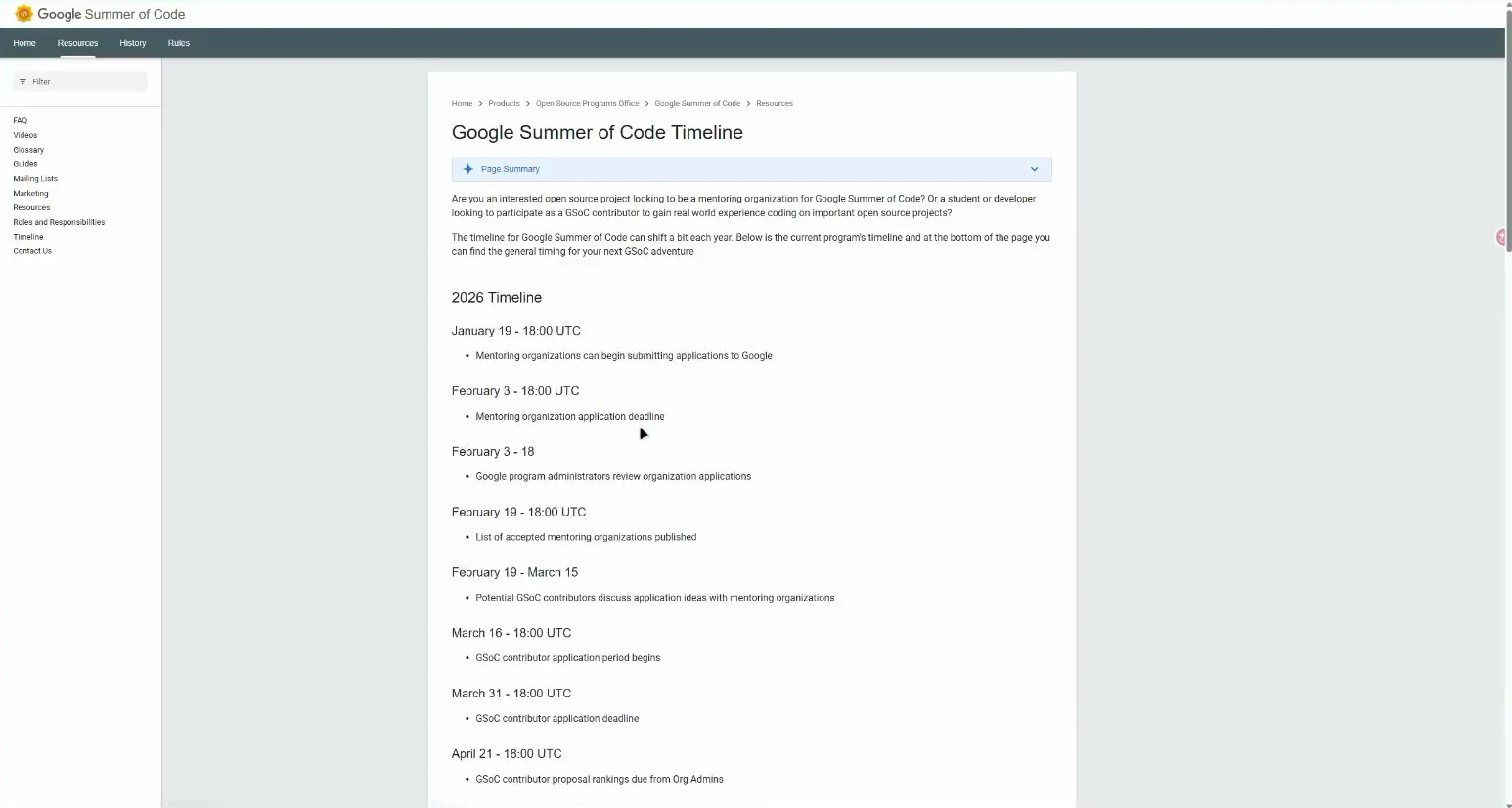
浏览组织列表时可以直接按关键词搜索感兴趣的方向——比如我搜 Linux 时,就看到过 EROFS 文件系统这类很有意思的题目。这里有个容易被忽略的细节:一个组织在初期可能会放出十几个备选任务,但 Google 最终只会批给它有限的资助名额。哪怕你和导师聊得很顺,如果这个项目最终没拿到 Google 的槽位,这次申请也会落空——这属于运气变量,心态放平就好。
如果打算冲击下一年的 GSoC,现在就可以先翻翻往年的组织清单,给感兴趣的社区发邮件问问明年是否有延续计划,顺手做一点文档修补、简单 Bug 修复或者测试补充,提前在社区混个脸熟。当然这并非硬性门槛——我自己两次中选其实都没提前刷 PR,都是看中了题目才直接去联系 Maintainer。
顺带提一下资格和补贴:2025 年之后,GSoC 已经不再强制要求申请者必须是在校学生,只要年满 18 岁、属于开源新手,哪怕已经工作一两年但之前很少参与开源社区,同样可以去试一试,具体还是看各社区 Maintainer 的考量。完成项目后的补贴也相当实在,我两次参与分别拿了大约一万和将近三万人民币。
拆解我的 14 页申请草案
GSoC 申请最核心的材料是 Proposal。很有意思的是,Google 刻意不提供统一模板,因为他们认为每个开发者都该有自己的规划方式。我第一年申请 The FOSSi Foundation 的 OpenRISC Linux Feature Development 项目(导师 Stafford Horne)时,先用中文写完再译成英文,整份 Proposal 一共 14 页:
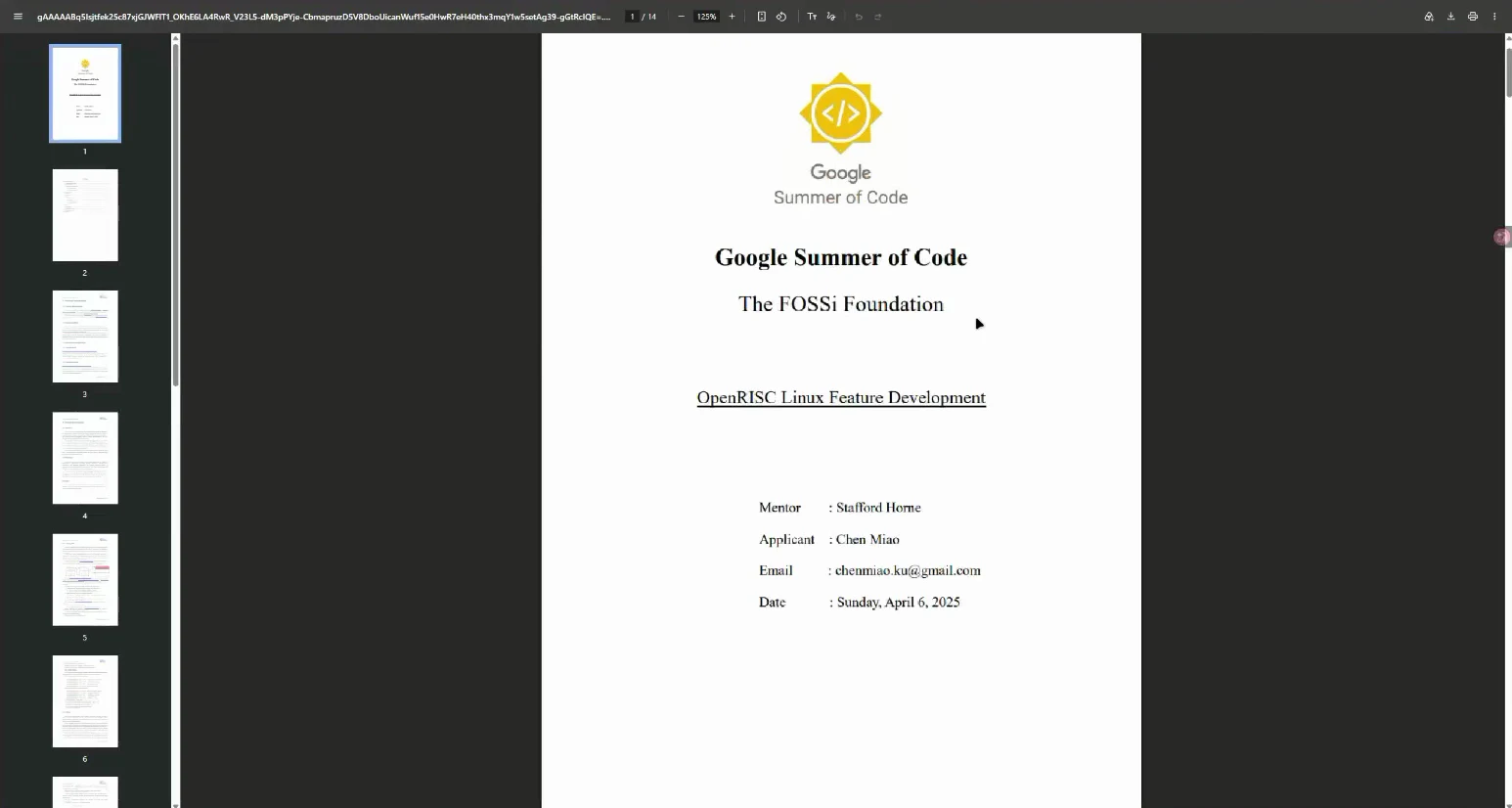
整份文档拆成四块,核心目标只有一个——让社区相信你有能力把这件事交付出来:
- 个人介绍与过往经历:交代自己是谁、熟悉什么工具、做过哪些相关练习或开源尝试;
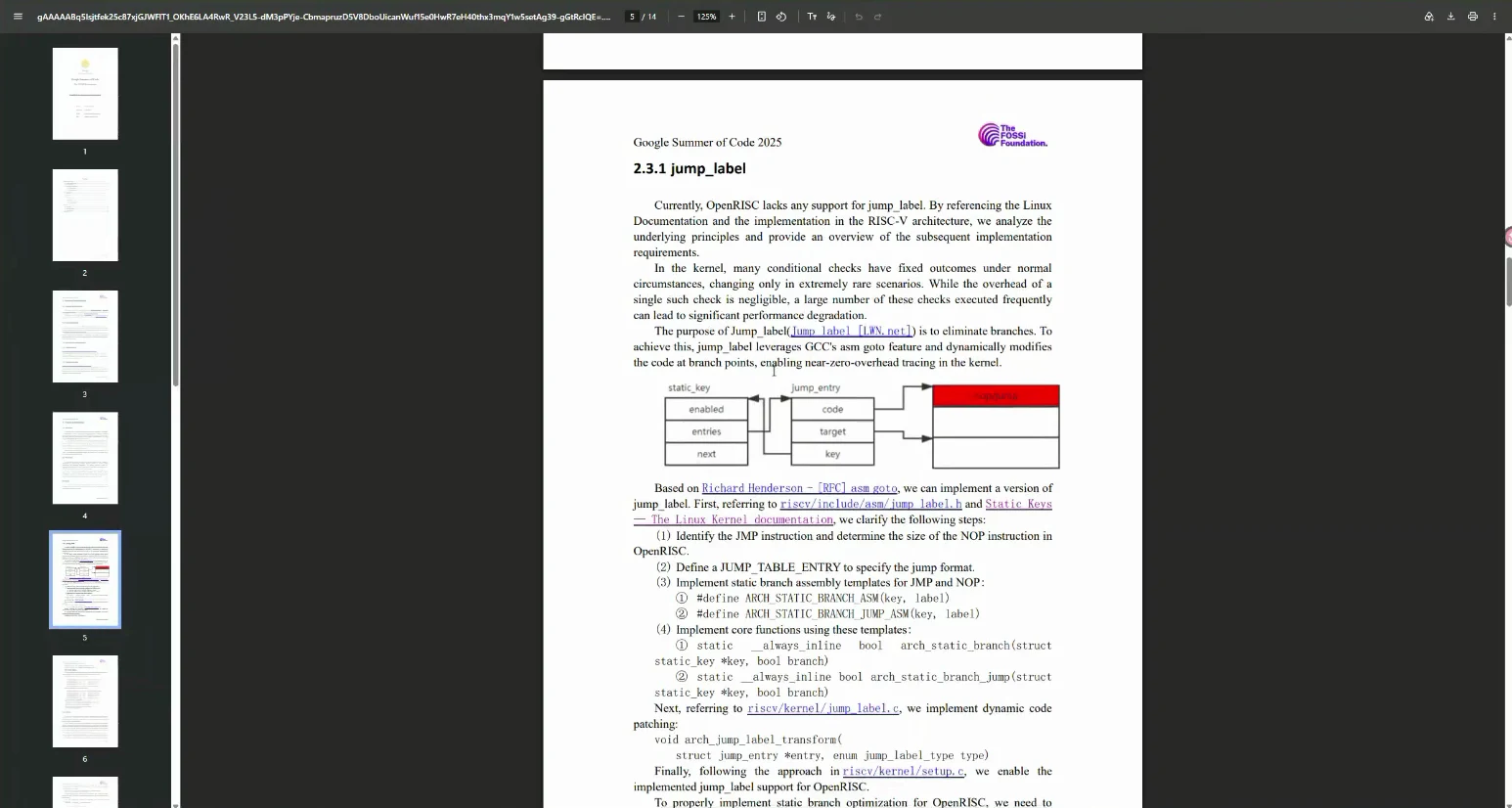
- 项目理解与底层源码调研:我当时的核心目标之一是给 OpenRISC 加上
jump_label机制(ftrace这类低开销内核追踪就依赖它)。申请前我直接翻了内核源码,对照 RISC-V 的jump_label实现梳理了static_key、jump_entry、arch_jump_label_transform的工作机制,自己还画了结构图并动手做了实验验证; - 分阶段与按周拆解的时间线:既给出宏观里程碑,也细化到每一周打算做什么——所有人都知道时间线只是预估,实际可能会超期也可能提前,但它能清楚展现你拆解工程问题的思路;
- 个人承诺与后续规划:写清楚每周能投入的时间以及结项后的持续参与打算(说实话,这部分往往带点理想色彩——我做完 OpenRISC 后原本也计划继续在上面做很多东西,后来因为其他方向投入,很多也就没接着做了)。
别把范围画太大,更别做完一半就失联
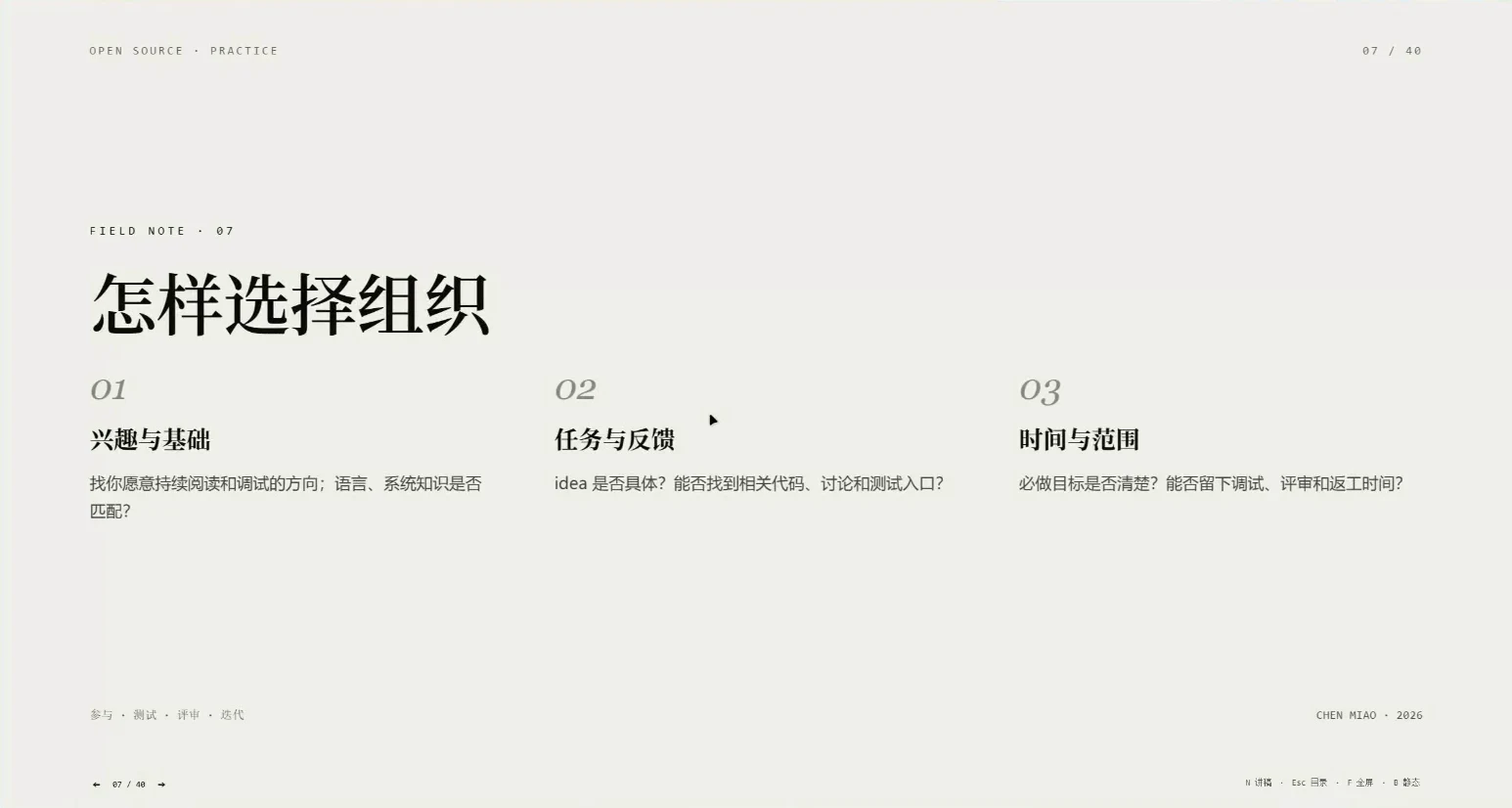
选组织终究看个人兴趣、技术基础以及任务本身够不够具体。有一个真实教训一定要提前分享:第一次写 Proposal,千万别贪大。
我第一次把草案写完发给 Maintainer 时,题目清单里本来列了四个子任务(除了 jump_label 和 ftrace,还包括 kprobes 和 eBPF),我一拍脑袋全写进了方案里。结果 Maintainer 直接回邮件问我:“这四个任务全做,你确定你做得下来吗?”讨论完我才冷静下来,后两个短期内确实啃不下来,于是果断收敛范围,专注把 jump_label 和 ftrace 做扎实。所以写方案时一定要大胆找 Maintainer 沟通——做开源必须具备不怕问的心态,就算偶尔被挑刺甚至被喷,其实都很正常。
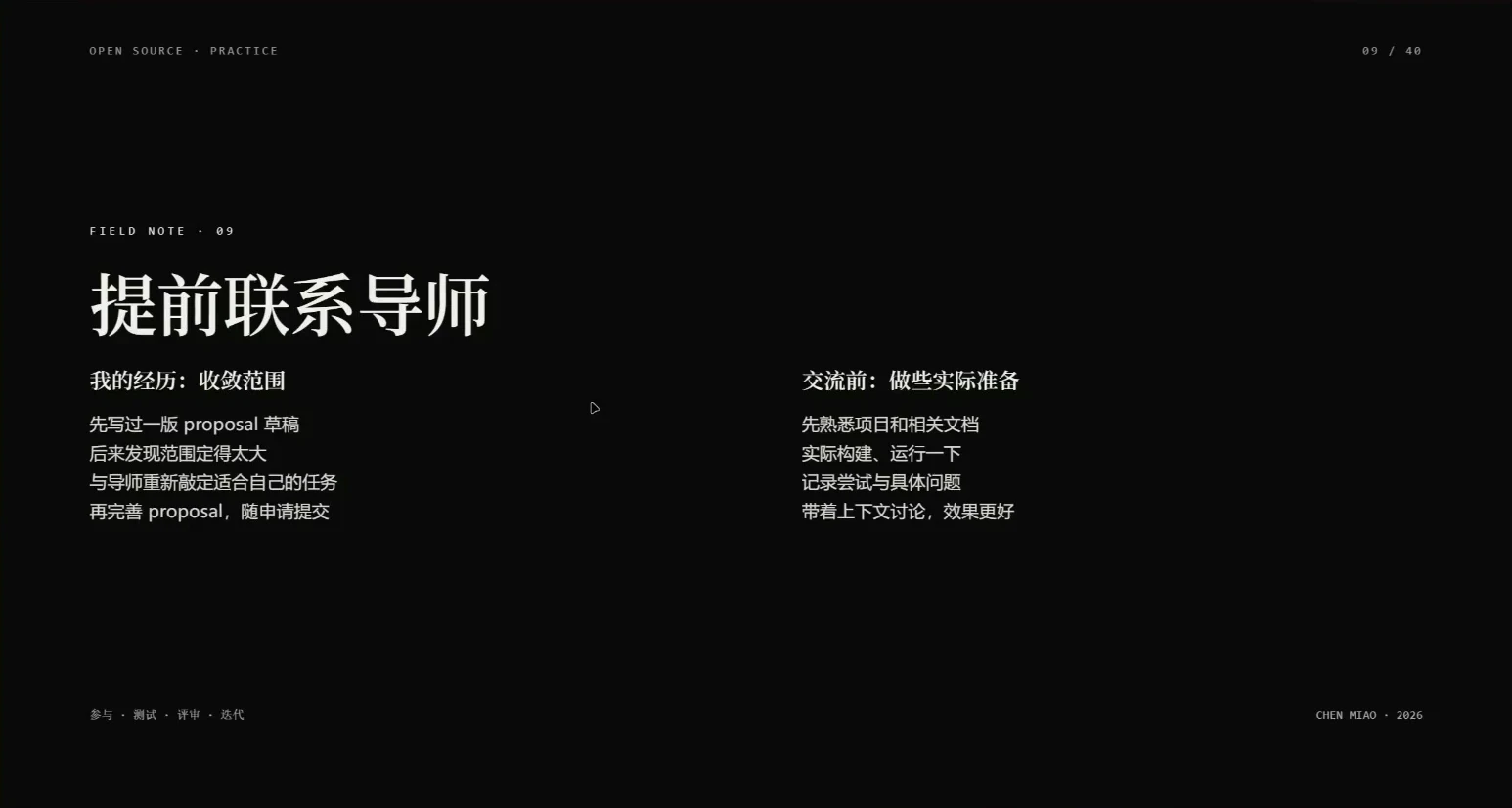
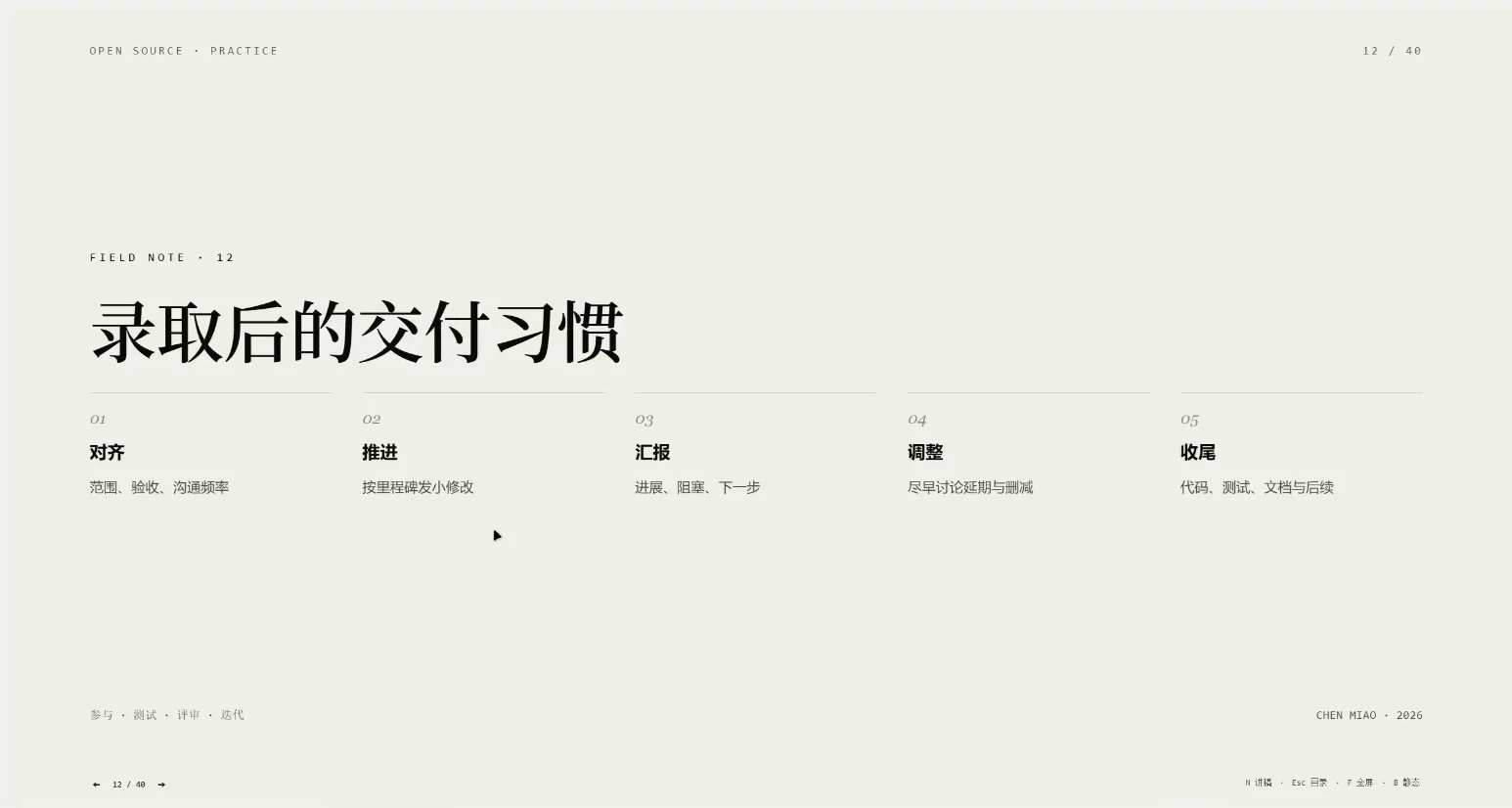
一旦项目启动,或者日常参与任何开源社区,一定要和 Maintainer / Mentor 保持固定节奏的同步——一周一次、两周一次,哪怕一个月一次都行,关键是让对方知道“你还在推进”。我在 LLVM 做 Review 时,经常见到一年前提交的 PR:Reviewer 认真写了一堆意见,结果原作者从此人间蒸发,不知道是答不上来还是没空继续,PR 就那样干晾了一整年。
另一个常见现象是 good first issue 占坑不交代码:无论是 Rust、Cargo、LLVM 还是 KVM,经常有人留言说“我来认领”,结果再也没见过对应的 PR。这类情况实在太多,现在很多社区干脆不再提前把 Issue assign 给你——开源参与没有强制义务,想做就直接上手写完提 PR,不必干等分配。
Linux 内核邮件列表实战
聊完 GSoC,来看看真正给 Linux 内核提补丁是什么体验。
既简单又不简单的邮件工作流
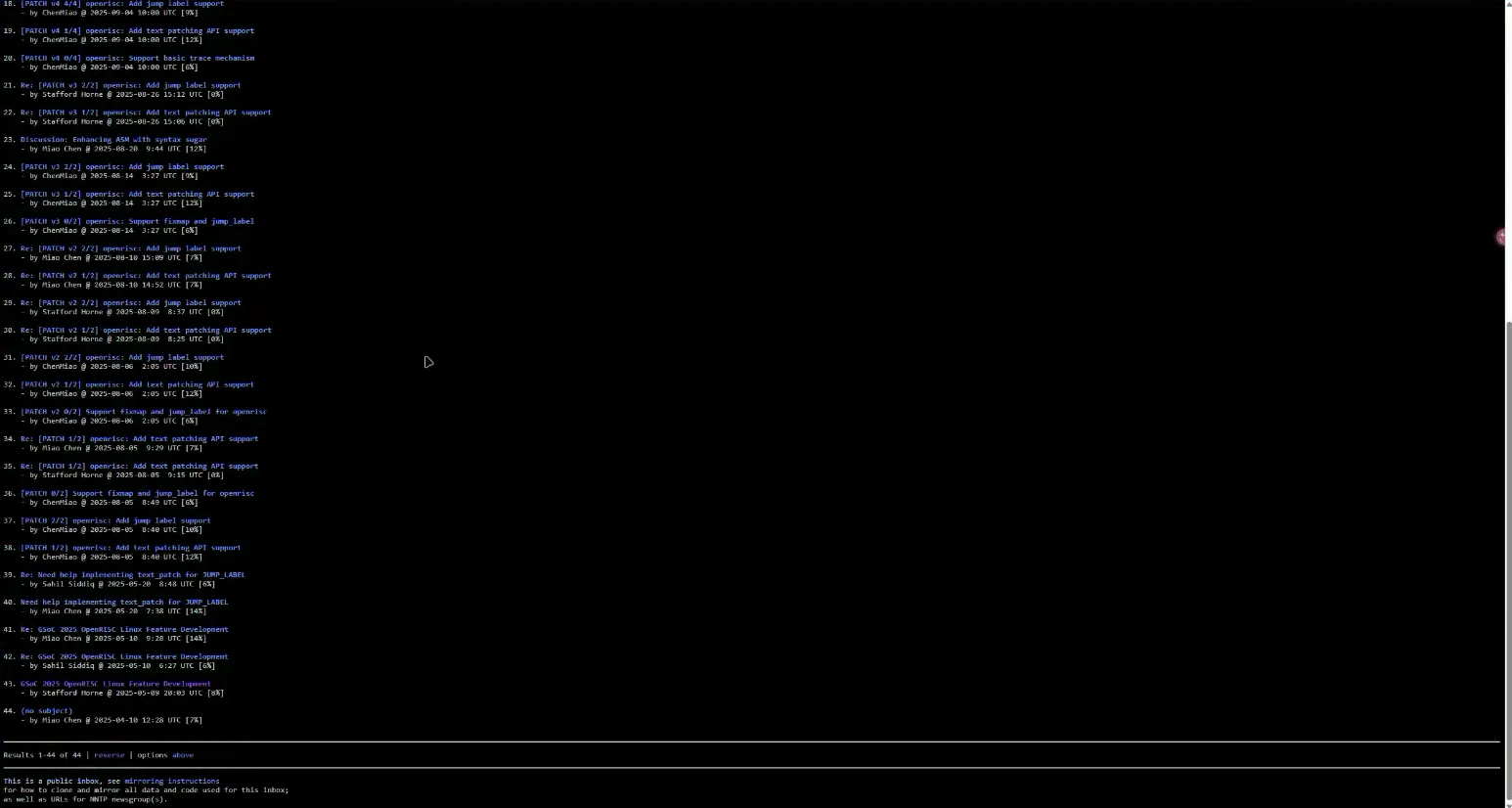
对于习惯了 GitHub 图形界面、Issue 列表和 PR 页面的人来说,第一次打开 Linux 邮件列表归档(例如 lore.kernel.org)多半会发懵。我第一眼看那满屏纯文本线程和 patch diff 时,根本分不清哪封邮件回复了哪封,也看不出整段代码到底改了什么。
除了界面“复古”,邮件列表还带来很强的心理门槛:每次准备点发送,我都特别怕收件人 To / Cc 填错,一不小心把邮件群发给一大群无关开发者,被人家当成骚扰;也怕英语用词不够地道;更怕自己对内核理解不到位,一改把内核改崩了。
所以我觉得参与 Linux 内核既简单又不简单:在 Agent 普及的今天,单纯写代码的成本其实已经不高了,真正的成本转移到了怎么与上游交流、怎么写清楚说明以及怎么扎实地做测试。
一个补丁讲清一件事
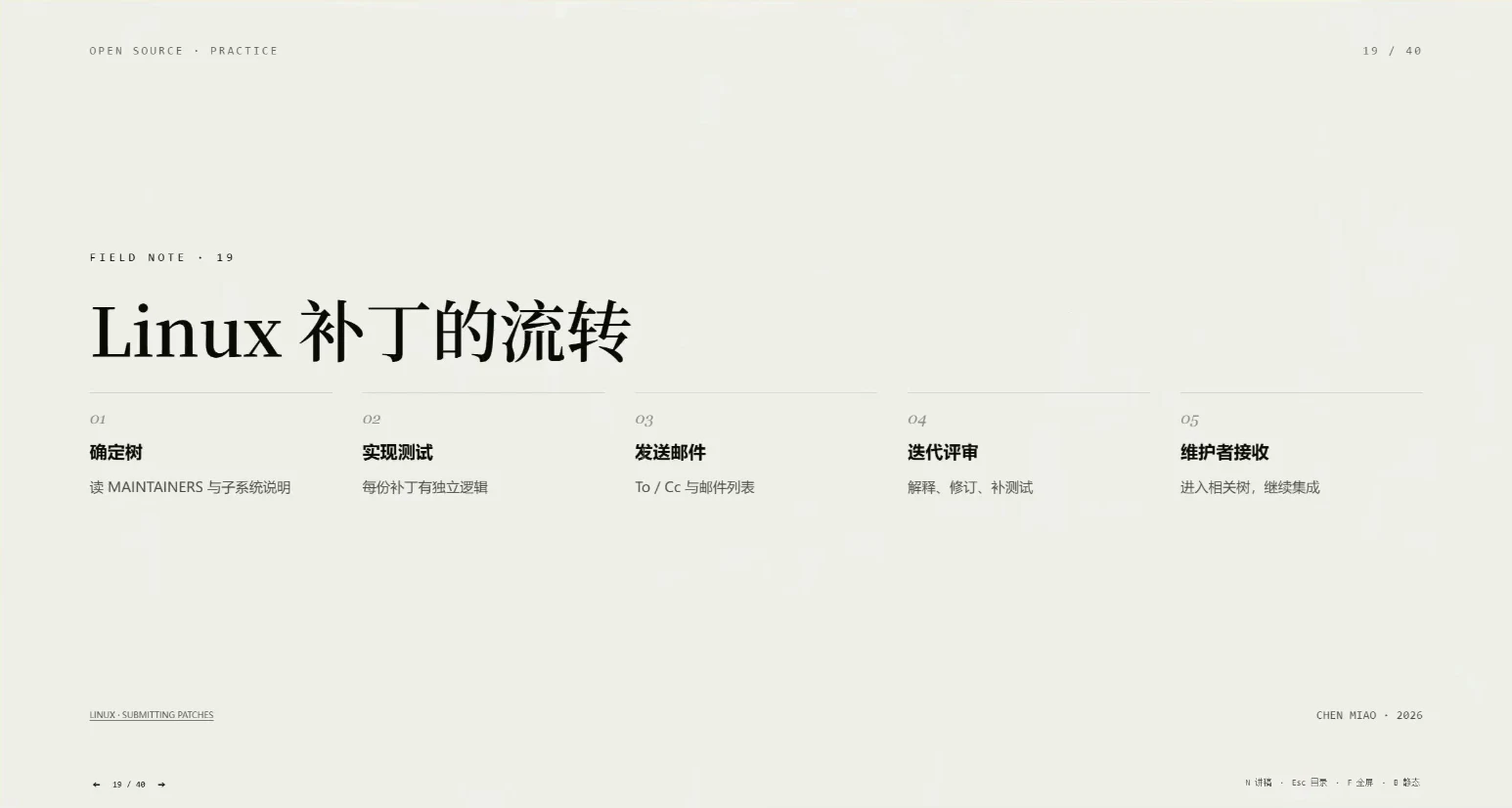
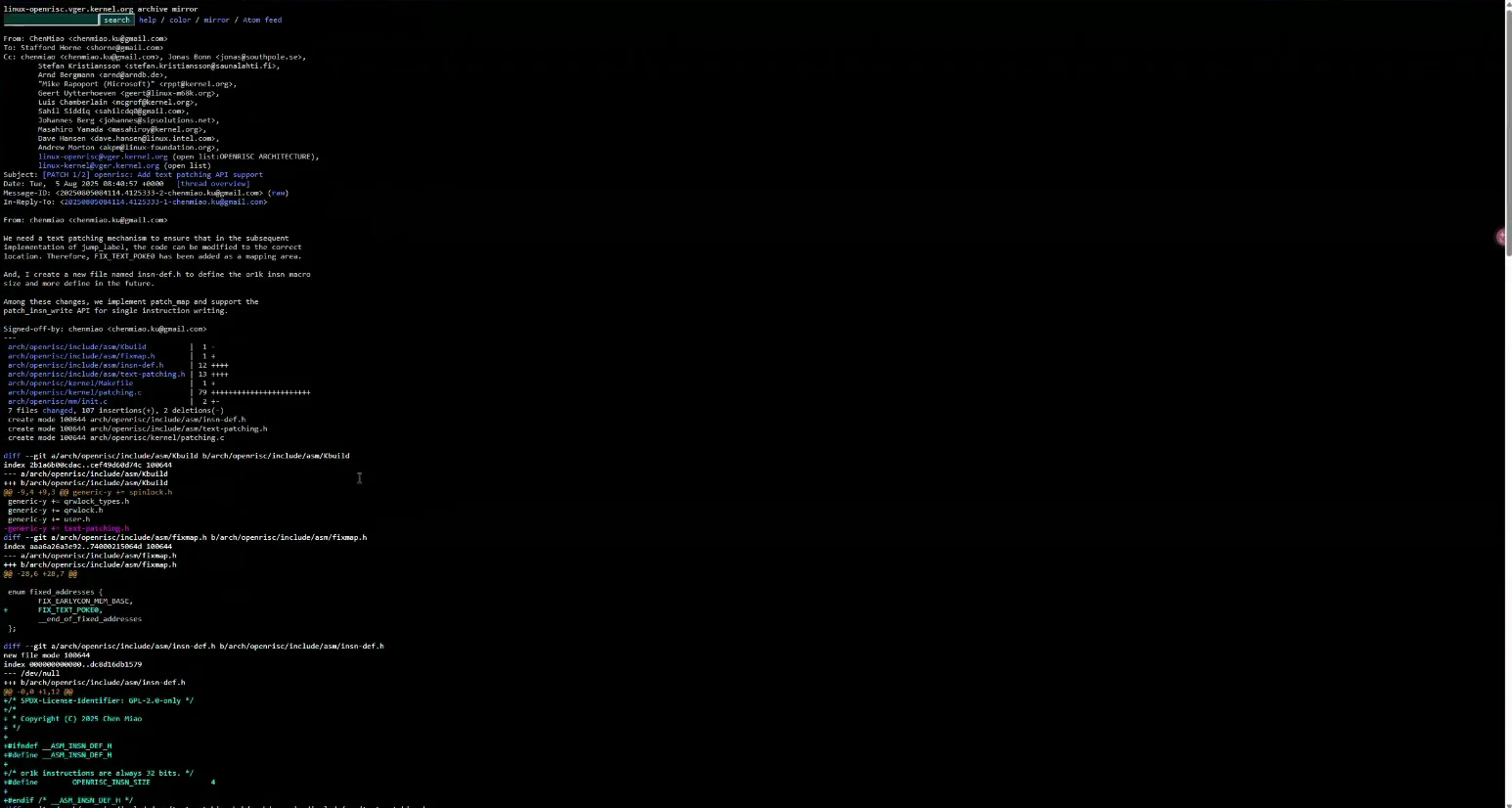
以我当年给 OpenRISC 提交的文本修改接口补丁 [PATCH 1/2] openrisc: Add text patching API support(新增 FIX_TEXT_POKE0 映射、arch/openrisc/include/asm/insn-def.h 与 arch/openrisc/kernel/patching.c)为例,从最初的 v1 一路迭代到 [PATCH v5 0/4],再加上基础 static ftrace 支持,最终通过 Maintainer 的 [GIT PULL] OpenRISC updates for 6.18 进入主线。
在准备和发送内核补丁时,有几条基本规矩绕不开:
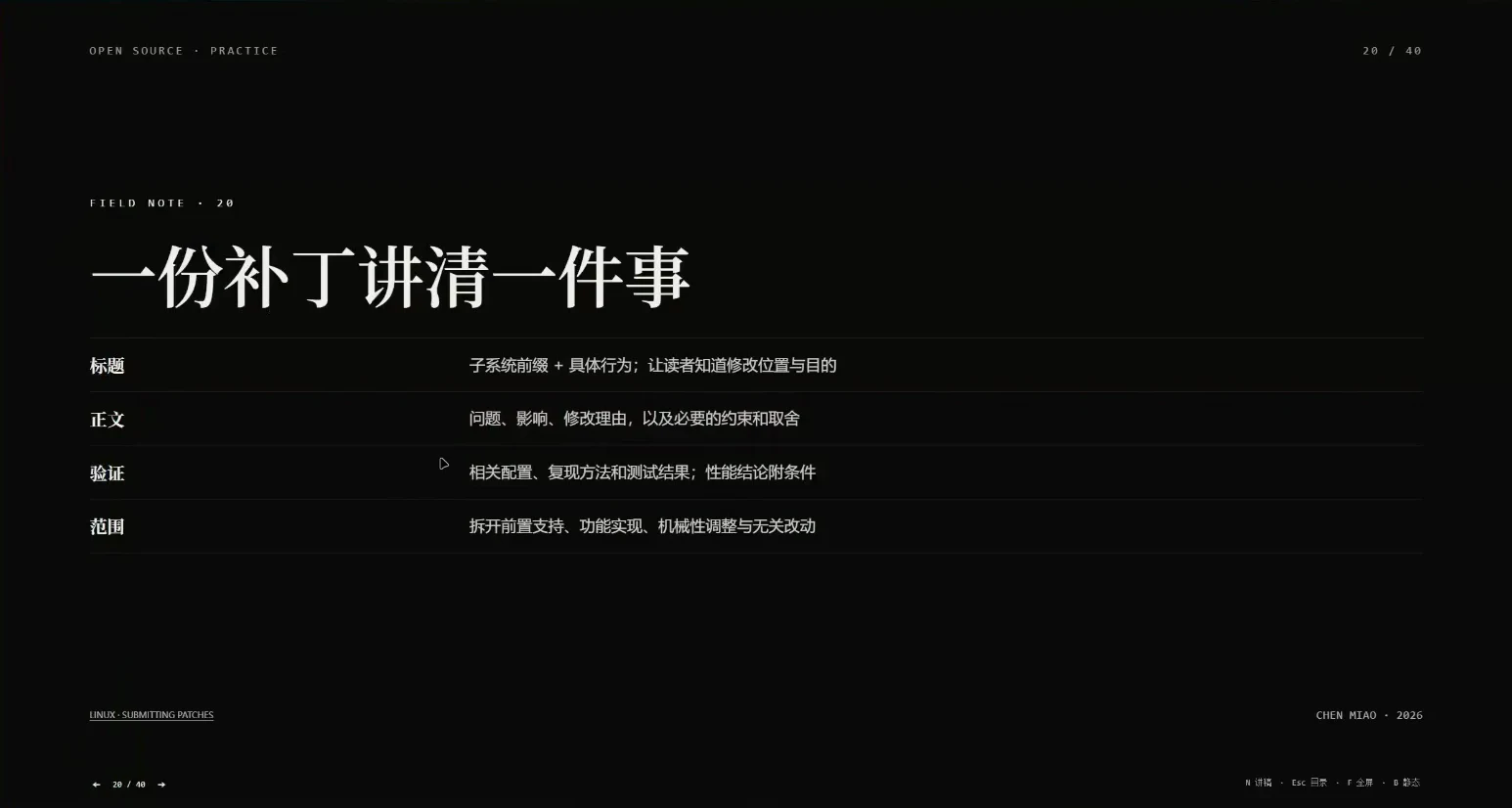
- 粒度清晰、独立可测:尽量一个 commit 只完成一个独立功能,并且保证每个 commit 都能单独编译、运行和测试(实在存在前后依赖的系列补丁再拆成多封);
- 补丁即邮件:通过
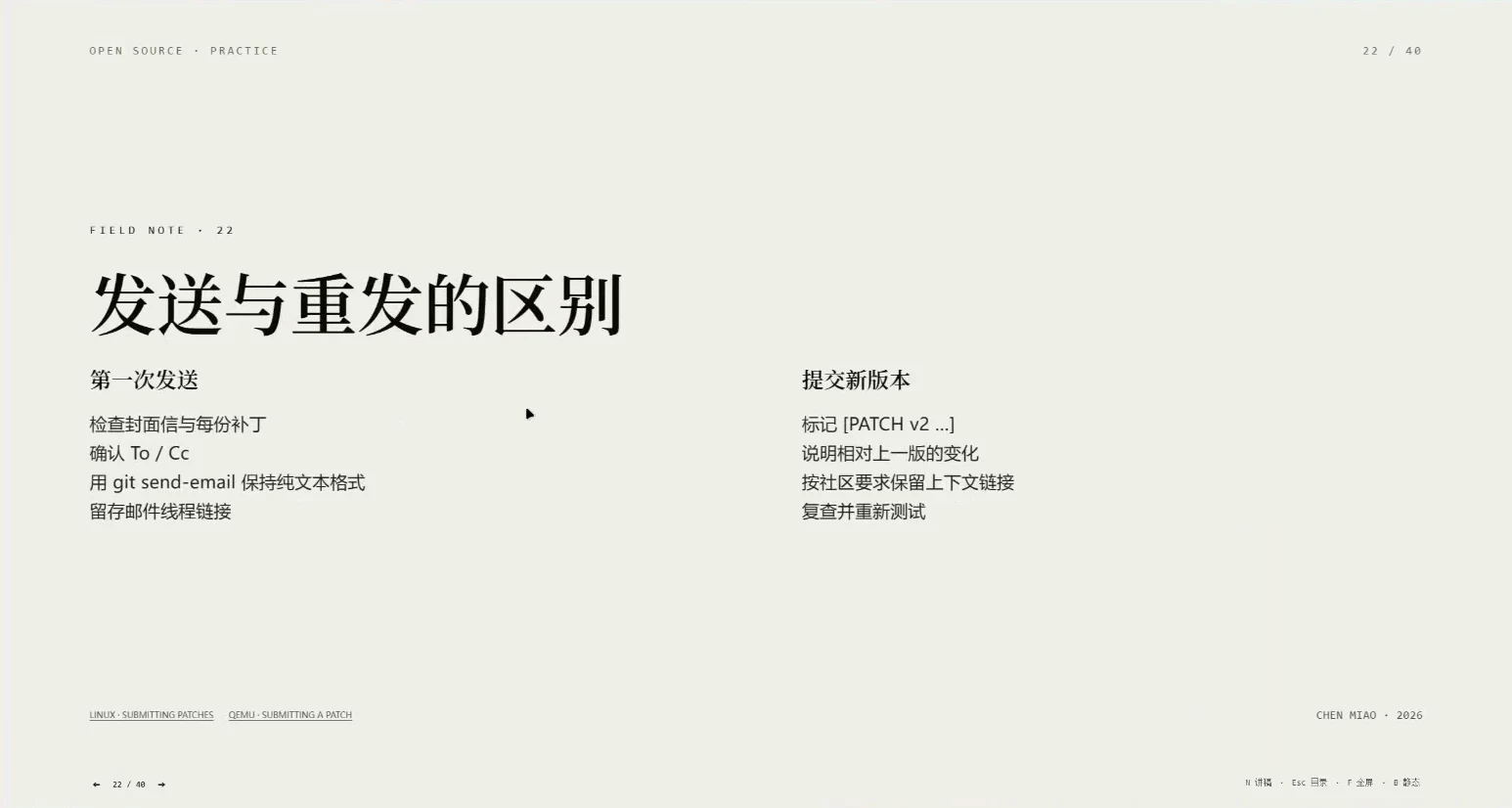
git format-patch把每个 commit 导出成独立 patch 文件,标题带子系统前缀与具体行为,正文讲清楚背景、影响、取舍与测试条件; - 纯文本发送与版本标记:发送前反复核对
To / Cc收件人列表,使用git send-email或支持纯文本的客户端发送,严格保证纯文本(TXT),绝不能带 HTML 渲染;后续按评审意见修订重发时,在标题里递增版本号(如[PATCH v2 ...]、[PATCH v5 ...])并写清楚相对上一版的改动记录。
回应 Review:千万别当“Agent 的 Agent”
当你的补丁发出去、真的有人来给你做 Review 时,有两件事我特别想单独拎出来说。
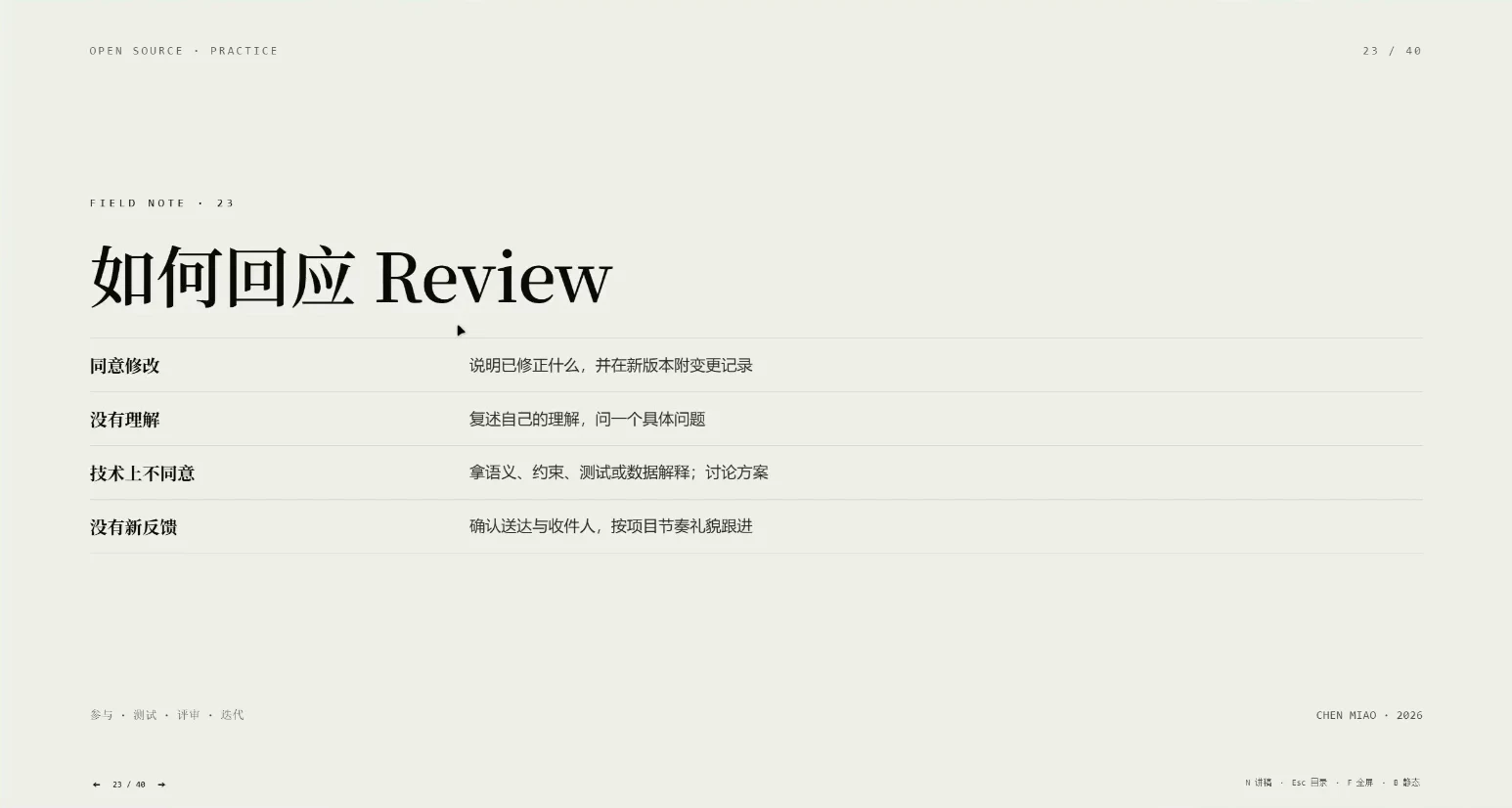
第一,千万不要把自己活成“Agent 的 Agent”。现在我很担心一种在新人里越来越常见的操作:让 Agent 写完代码,自己扫都不扫直接发给上游;Reviewer 花时间逐行帮你找完问题,你张口就是“对的,你是对的,我马上去改”,转头就把 Reviewer 的原话复制粘贴回 Agent,改完再原封不动丢回上游。
我不要求每一行代码都必须纯手工敲出来,但你一定要把 Agent 写下的每一行都看懂,搞明白它做了什么、为什么要这么改。这首先是开源社区最基本的礼仪——Reviewer 是在消耗自己的业余或工作时间帮你把关,我们不能理所应当地把理解代码的责任全部甩给上游维护者。换位思考一下,等将来你开始 Review 别人的 PR,看到一份全由 AI 生成、问两句细节作者完全答不上来的代码,你也一样会觉得非常糟糕。
第二,不要因为性格内向而不敢礼貌反驳。如果 Reviewer 质疑你“这里是不是改错了、有没有必要”,而你经过充分验证确信自己的理解没错,千万别不好意思开口——大胆、有礼貌地把语义依据、边界条件或测试数据摆出来,心平气和地和对方讨论。无论是走邮件列表的 Linux、QEMU,还是走 GitHub PR 的 LLVM,这条原则完全通用。
Agent 时代的社区 AI 边界
这阵子我在 Linux、QEMU 和 LLVM 三个社区来回切换,明显能感受到大家面对 AI 时的处境和政策并不一样。
Linux 与 QEMU:谁提交,谁负全责
客观说,Linux 对新手有个天然难点:不像 QEMU 有 GitLab Issue 列表可以翻,Linux 没有 Issue 也没有 PR,全靠邮件列表;如果不长期跟进源码,刚开始根本不知道该修什么。有了 AI 之后门槛确实低了一些——你可以让 AI 辅助你读代码、分析某个模块有没有潜在隐患,找到头绪后再自己动手验证。
之前 Agent 刚火起来时,Linux 社区一度讨论要求给 AI 协助的补丁加上 Assisted-by 标签,但后来又把这项强制规定取消了。背后的逻辑很干脆:社区不管你的代码是不是 AI 写的,最终署名提交的人是你,责任完全由你承担。 如果你不加审查就往邮件列表里狂发低质量的 “AI slop”,用不了几次,你的邮箱和名字在社区里基本就废了。
另外,用 AI 修 Bug 时要高度警惕**“错位修补”幻觉**:假设真实缺陷是经过多层函数调用后出现 A + B != C,AI 常常会在整条调用链中间某个本来完全正确的路径上硬塞一个特例判断,跑完它自己构造的简单用例就宣称“修好了”,实际上跟根因毫不相干。加新功能时改动面广,你或许还能和 Reviewer 争一争设计偏好;修 Bug 一旦修错位置,懂行的维护者一眼就能看穿。还有像我平时用 GPT 时,经常本体只改两行代码,它顺手就甩出一百多行测试代码,哪些该留、哪些该删,都必须自己心里有数。
LLVM:抵制“榨取式贡献”,严禁 AI 做新手任务
相比之下,目前 Review 压力非常大的 LLVM 社区态度要严厉得多。社区不仅出现过全面禁止 AI 代码的 RFC 提案,官方文档 LLVM AI Tool Use Policy 也明确提出了“榨取式贡献(Extractive Contributions)”的概念——即审阅与合并所消耗的维护者成本远远大于改动本身带来的价值。
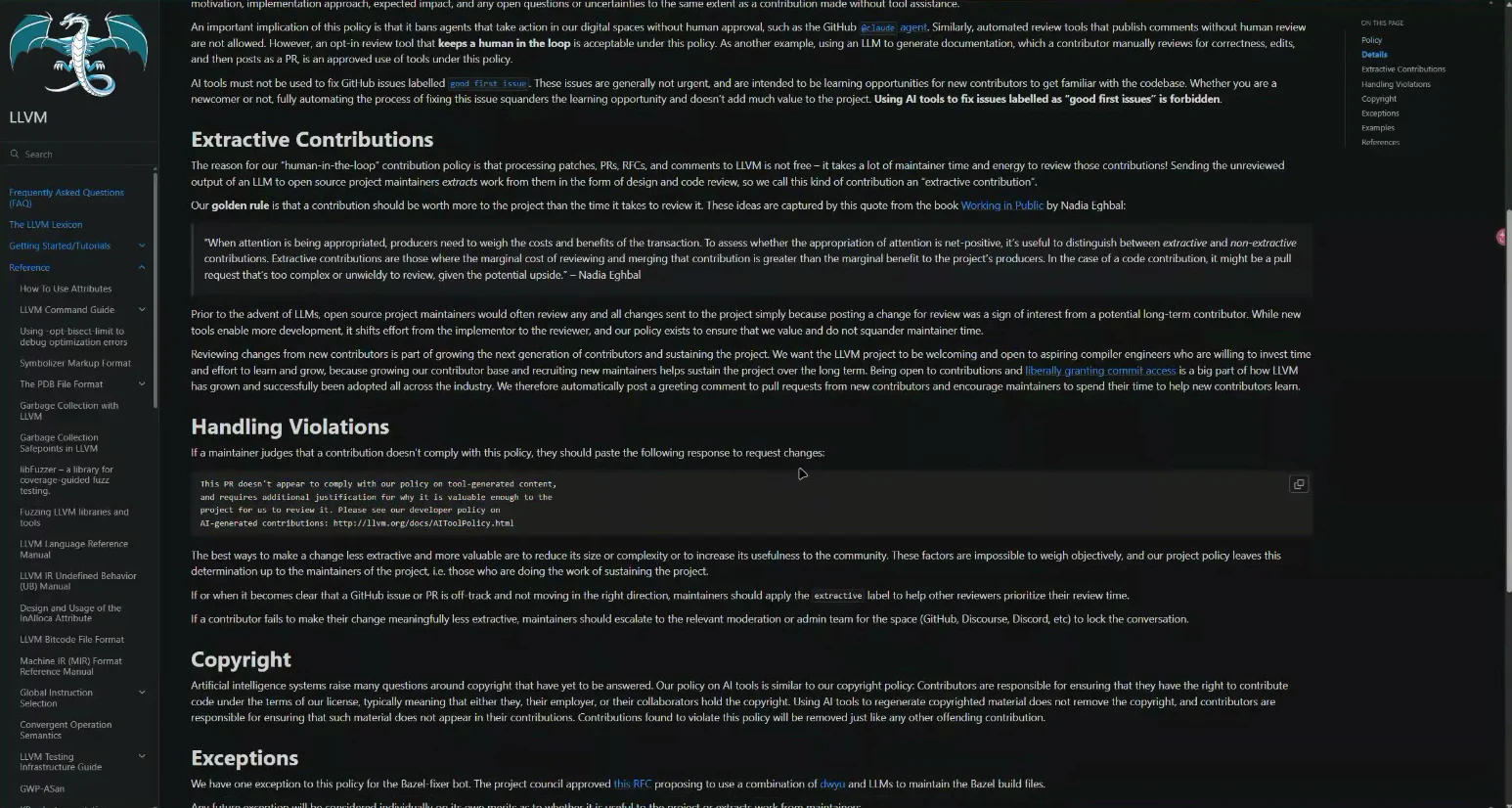
按照 LLVM 现行政策:
- 必须保持 human in the loop,维护者一旦判断 PR 完全由 AI 生成且作者说不清楚细节,可以直接关闭 PR;
- 明确禁止使用 AI 工具解决标注为
good first issue的新手任务(可以用 AI 辅助学习概念,但不能让 AI 直接替你做改动); - 严禁把维护者的评审评论直接丢给 AI 改完再生成回复套话。
说到底,我觉得 AI 时代最健康的用法,是让 AI 当你的老师——遇到看不懂的底层代码,让 AI 帮你拆解、把你教会,然后再由你来掌控修改。如果你连一个驱动怎么用、QEMU 怎么编译和运行都还没搞明白,就让 AI 帮你改出一段“看起来挺漂亮”的代码直接往上交,表面上看好像多了条提交记录,实际对你自己没有多大成长。想在底层开源领域长期走下去,核心原理终究得自己啃下来。
两个自研的开源协作小工具
最后顺便分享两个我最近在深度参与上游贡献时,因为用不顺手现有工具而自己写的小项目,如果大家有兴趣也欢迎一起折腾:
- ThreadLine:参与
llvm/llvm-project这种超大型仓库时,GitHub 原生界面在追踪“我发起的 PR”“我审阅的队列”“收件箱”和合并阻塞状态时不太顺手,我干脆自己写了一个专注个人工作流的本地工具;
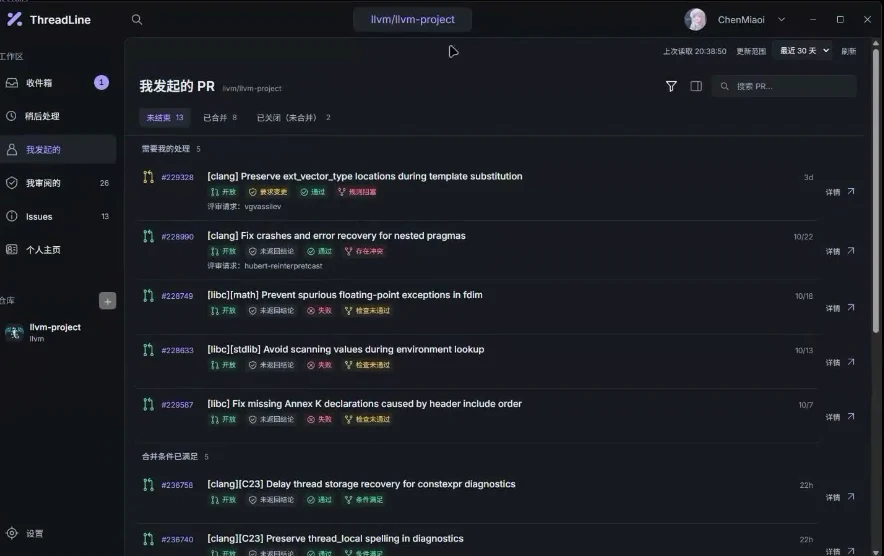
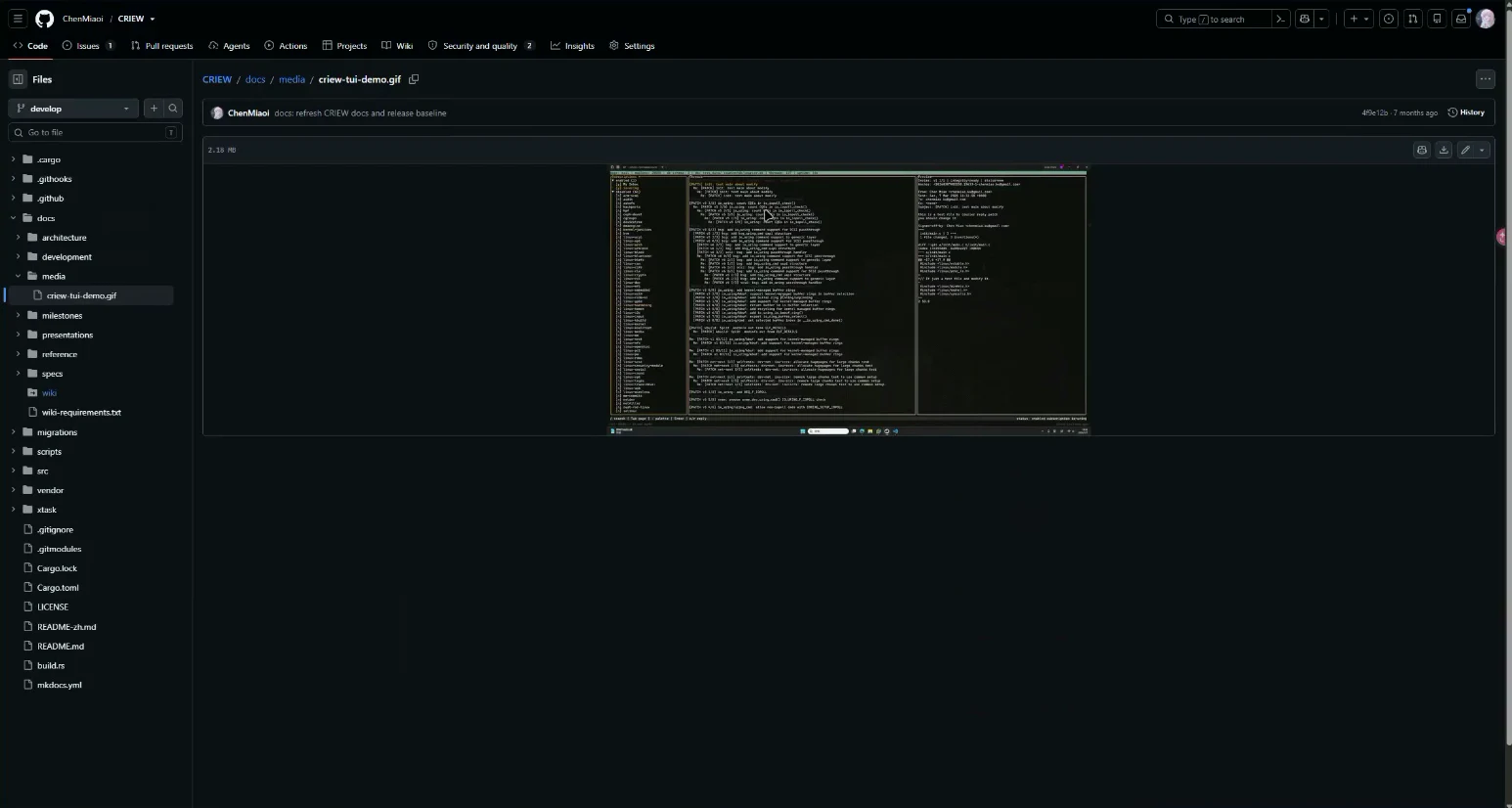
- CRIEW:专门面向 Linux 内核邮件列表开发的 Rust TUI 工具。如果你直接用个人邮箱订阅内核邮件列表,每天几百封邮件涌进来根本看不过来;用 CRIEW 可以不依赖传统邮件客户端,直接按需订阅、筛选自己关心的子系统线程并在终端里做 Review。
现场问答
OpenRISC 现在的社区状态如何?适合拿来学习吗?
问题(倪升跃):OpenRISC 也发展很多年了,现在社区整体处于什么状态?是不是大家基本都转向 RISC-V 了?适合拿来做学习吗?
我的回答:我参与的时候其实也有同样的疑问,专门和 Maintainer 聊过。实话讲,OpenRISC 目前在上游的活跃度和支持程度都不太理想,基本只剩一位 Reviewer 在做比较保守的日常维护,很少再增加新特性,生态远不如 RISC-V;商业上也很少有公司继续采用,大多已经转向 RISC-V 或 ARM。
如果打算拿它来学习,我其实也不太推荐——如果想学驱动开发,驱动本身和具体架构关系不大;如果想学体系结构本身,OpenRISC 如今已经相当小众甚至接近退出主流舞台了。说出来挺好笑的,我当初申请项目时甚至一度以为 OpenRISC 是 RISC-V 的完全开源版本,上手之后才发现完全不是一回事。所以如果现在起步学习,直接挑选 RISC-V、ARM 或 x86 这类更成熟的架构会划算得多。
相关资源
- 本次分享完整回放(B 站):Linux 开源贡献流程分享
- Linux OpenRISC 补丁归档示例:lore.kernel.org/openrisc/?q=chen+miao
- LLVM AI 工具使用政策:llvm.org/docs/AIToolPolicy.html
- ThreadLine(个人 GitHub 协作客户端):github.com/ChenMiaoi/threadline
- CRIEW(Linux 内核邮件列表 Rust TUI 工具):github.com/ChenMiaoi/CRIEW
This post is adapted from my October 30, 2026 talk at the MFCP Open-Source Practice Sharing session, Linux Contribution Workflow.
I'm Chen Miao (Lei Chen, GitHub ChenMiaoi), currently a Research Assistant at The Hong Kong Polytechnic University and an active upstream contributor to Linux, QEMU, and LLVM. I didn't start programming until my sophomore year of college, and I made my first real upstream contributions as a junior. In this post, I share a candid, newcomer-focused account of how I broke into the Linux kernel through Google Summer of Code (GSoC), how mailing-list patch workflows actually feel in practice, how Linux, QEMU, and LLVM treat AI-assisted contributions today, and two workflow tools I built along the way.
Here is the roadmap: first, getting into GSoC; second, navigating Linux mailing-list workflows through my real OpenRISC kernel patch series; third, comparing Linux, QEMU, and LLVM policies in the agentic era; and finally, a quick look at two personal tools I wrote to make upstream work smoother.
Stop Asking Whether You're Qualified
I didn't apply for GSoC until 2025, even though I had known about it for years. Back before LLMs and coding agents took off, people around me kept saying, "Developers from all over the world compete for GSoC—as a beginner, you'll definitely get rejected." I wasted a lot of time believing that.
I kept circling the same three doubts: Am I even qualified? Do I have the technical chops? And if I do get accepted, can I actually finish the project? Almost every newcomer who has coded for a year or two without shipping upstream hits that exact mental wall.
Looking back, the answer is blunt: just do it.
When I applied for the first time, I had zero Linux kernel development experience. I simply emailed the maintainer anyway—and he told me straight up that GSoC project ideas are designed for newcomers. In a maintainer's eyes, you are qualified the moment you show up, ask questions, and put in the effort.
GSoC Timeline and Proposal
GSoC resembles MFCP in spirit: Google invites organizations to propose projects with mentors, who select contributors—except GSoC uses a competitive proposal process rather than open task claiming.
Timeline, Slots, and Eligibility
Organizations submit applications to Google in January and February, the accepted list comes out in late February, contributor proposals open from mid- to late March, and selections are announced in May or June.
When browsing organizations—say searching for Linux and finding projects like the EROFS filesystem—keep one caveat in mind: an organization may list a dozen project ideas, yet Google only funds a handful of slots. Even a strong application can miss out if a specific task doesn't receive a slot, so treat that part as luck rather than personal failure.
If you are eyeing next year's cycle, you can already browse past organizations, email them to ask whether similar projects are planned, and submit small documentation fixes, bug patches, or tests to become a familiar name. That said, prior PRs are not strictly required—I didn't send warm-up patches for either of my two accepted applications; I simply picked projects I liked and reached out directly to the maintainers.
One welcome policy change: since 2025, GSoC no longer restricts applicants to university students. As long as you are 18+ and relatively new to open source—even if you have worked in industry for a year or two—you can still apply, depending on the mentoring organization. The stipends are generous as well (across my two summers, they amounted to roughly 10,000 RMB and nearly 30,000 RMB).
Anatomy of My 14-Page Proposal
Because GSoC is proposal-driven, Google deliberately refuses to hand out a single template—they want to see how you plan an engineering project. For my first application to The FOSSi Foundation (OpenRISC Linux Feature Development, mentored by Stafford Horne), I drafted the proposal in Chinese first, translated it into English, and ended up with 14 pages:
Every section served one purpose—earning the community's trust that I could actually deliver:
- Background and Experience: Who I am, what tools I know, and prior projects or open-source experience.
- Deep Technical Analysis: My task included bringing
jump_labelsupport to OpenRISC (the low-overhead patching mechanism behindftrace). Before applying, I studied the Linux kernel's RISC-V implementation, broke downstatic_key,jump_entry, andarch_jump_label_transform, drew architecture diagrams, and ran small local experiments. - Macro and Week-by-Week Timeline: Both a high-level schedule and weekly milestones. Everyone knows timelines are estimates—some weeks slip, others finish early—but spelling them out proves you have thought through the work.
- Commitments and Post-GSoC Plans: Availability and future goals (admittedly the most aspirational part—I originally planned to build much more on OpenRISC afterward, though my focus later shifted elsewhere).
Right-Sizing Scope and Never Going Radio Silent
Choosing an organization comes down to interest, technical fit, and how concrete the idea list is. One lesson I learned immediately: don't overstuff your first proposal.
My first draft ambitiously pledged to deliver all four sub-tasks in the idea list—including kprobes and eBPF/BPF on top of jump_label and ftrace. The maintainer replied bluntly: "Are you sure you can finish all four?" Talking it through quickly grounded me; I narrowed the scope to jump_label and ftrace and shipped both cleanly. Never be shy about asking maintainers early—getting candid pushback is simply part of open source.
Once you start contributing, keep a steady communication cadence—weekly, biweekly, or even monthly—just so maintainers know you are still active. Reviewing PRs in LLVM today, I constantly stumble across year-old pull requests where a reviewer left careful feedback and the author simply vanished.
The same applies to good first issue claims across Rust, Cargo, LLVM, and KVM: so many people claim an issue and never submit a PR that many communities refuse to assign issues anymore. Open source isn't a binding contract—if you want to work on an issue, just build the fix and open the PR.
Real-World Linux Mailing-List Workflow
Why Kernel Contribution Feels Both Simple and Intimidating
Coming from modern GitHub UIs with polished issue trackers and PR threads, opening a Linux mailing-list archive on lore.kernel.org feels like stepping back in time. The first time I stared at raw patch diffs and nested plain-text replies, I honestly couldn't tell which email replied to which or what the code was even doing.
Beyond the learning curve of reading threads, email carries psychological friction: every time I send a patch, I still double-check To and Cc out of fear of spamming the wrong maintainers, worry about English phrasing, and wonder whether a subtle mistake might break someone's kernel.
That is why Linux feels both simple and hard: in the age of coding agents, writing the code itself is no longer the main bottleneck—the real work has shifted to upstream communication, thorough testing, and navigating community norms.
One Patch, One Clear Story
Take my OpenRISC series on lore.kernel.org: starting with [PATCH 1/2] openrisc: Add text patching API support (adding FIX_TEXT_POKE0, arch/openrisc/include/asm/insn-def.h, and arch/openrisc/kernel/patching.c), iterating all the way to [PATCH v5 0/4] alongside basic static ftrace support before landing in [GIT PULL] OpenRISC updates for 6.18.
A few fundamentals make mailing-list submissions far smoother:
- Atomic, buildable commits: Keep each commit focused on a single logical change that compiles, runs, and passes tests on its own whenever possible.
- Patch equals email: Export commits with
git format-patch; write a subsystem-prefixed subject and a body explaining the problem, trade-offs, and exact verification steps. - Plain text and versioned resends: Double-check
To / Cc, send strictly as plain text (never HTML) viagit send-emailor a plain-text client, and mark revisions cleanly ([PATCH v2 ...],[PATCH v5 ...]) with a changelog of what changed since the previous version.
Responding to Reviews: Don't Become an "Agent's Agent"
Two rules matter above all once reviewers reply to your patch.
First, do not turn yourself into an agent's agent. Right now I worry about a pattern becoming far too common among newcomers: letting an agent write a patch, shipping it blindly, replying "Yes, you're right, I'll fix it" to every review comment, copy-pasting the reviewer's words straight back into the agent, and sending the output back upstream without understanding any of it.
I don't insist that you type every character by hand—I do insist that you read and understand every single line the agent wrote, and be able to explain why it belongs there. That is basic respect for upstream reviewers who donate their time to help you. Imagine sitting on the other side one day, reviewing an AI-generated patch whose author cannot answer a single question about their own code.
Second, don't let shyness stop you from pushing back politely. If a reviewer questions a change and you know—backed by semantics, constraints, or test data—that your implementation is right, explain your reasoning calmly and clearly. That holds equally across Linux and QEMU mailing lists and LLVM GitHub PRs.
Community AI Policies
Moving across Linux, QEMU, and LLVM makes it obvious that upstream communities are responding to AI in very different ways.
Linux and QEMU: Full Human Accountability
Unlike QEMU's GitLab issue tracker, Linux has no central issue board—making it tough for newcomers to even discover what needs fixing. AI tools genuinely help here by helping you read unfamiliar subsystems and spot potential bugs to investigate.
Earlier on, the Linux community discussed requiring an Assisted-by trailer for AI-assisted commits, and later dropped the mandate. The takeaway is blunt: the community doesn't police which tools you used, because you own full responsibility for every line you submit. Flood the list with unreviewed "AI slop," and your email address and reputation will quickly burn out.
Watch closely for AI bug-fixing hallucinations too. Suppose a bug occurs when A + B != C at the end of a deep call chain. An AI will often jam a hacky special-case check into an intermediate function that was never buggy in the first place—passing a toy reproducer while completely missing the root cause. You can sometimes debate design preferences on a new feature, whereas fixing a bug in the wrong place gets spotted immediately. Likewise, tools like GPT love generating 100+ lines of bloated tests for a two-line fix; you need the judgment to trim what doesn't belong.
LLVM: Rejecting "Extractive Contributions"
Under heavy review load, LLVM has taken a much stricter stance—including active RFC discussions about banning AI-generated code outright. Its official LLVM AI Tool Use Policy explicitly defines "extractive contributions": submissions that consume more maintainer review effort than the value they add.
Key rules in LLVM today:
- Human in the loop is mandatory: Maintainers can close a PR outright if they believe it is purely AI-generated and the author cannot justify or explain it.
- AI tools are forbidden on
good first issuetickets: You may use AI to learn concepts, not to automate fixes meant as onboarding exercises. - No copy-pasting review feedback into LLMs to generate automated replies.
Used well, AI is an extraordinary tutor—let it explain tricky codebases and teach you the fundamentals, then own the changes yourself. Modifying a kernel driver you don't know how to use, or patching QEMU before you know how to build and run it, may earn a superficial commit count without teaching you anything lasting.
Two Custom Workflow Tools
To smooth out my own day-to-day upstream friction, I ended up building two open-source tools—contributions and feedback are very welcome:
- ThreadLine: Managing active PRs, review queues, and inbox notifications across massive repositories like
llvm/llvm-projectfelt clunky in GitHub's default UI, so I built a focused local desktop workflow client.
- CRIEW: A Rust TUI client tailored for Linux kernel mailing lists. Subscribing your personal inbox directly to kernel lists brings hundreds of emails a day; CRIEW lets you follow selected subsystems and review patch threads cleanly from the terminal without setting up a traditional mail client.
Live Q&A
What Is the Current State of OpenRISC, and Is It Worth Learning?
Question (Shengyue Ni): OpenRISC has been around for many years—what does its community look like today, and is it still a good target for learning?
My take: I wondered the exact same thing and asked the maintainer directly. Candidly, OpenRISC's upstream activity is quite limited today—basically one reviewer keeping conservative maintenance going, with few new features and almost no commercial adoption as companies move toward RISC-V or ARM.
Even purely for learning, I wouldn't strongly recommend it. Driver development is mostly architecture-agnostic anyway, and if you want to learn a CPU architecture, OpenRISC has largely faded from the mainstream. Funny enough, when I first applied, I mistakenly thought OpenRISC was a fully open-source flavor of RISC-V—only to discover it isn't at all. Starting on a mature architecture like RISC-V, ARM, or x86 will pay off much more.
Resources
- Full Session Replay (Bilibili): Linux Contribution Workflow
- Linux OpenRISC Mailing-List Archive: lore.kernel.org/openrisc/?q=chen+miao
- LLVM AI Tool Use Policy: llvm.org/docs/AIToolPolicy.html
- ThreadLine: github.com/ChenMiaoi/threadline
- CRIEW: github.com/ChenMiaoi/CRIEW